A batch fryer can handle a varied namkeen range, but its useful capacity depends on heat recovery, cycle time, oil control and operator consistency—not the basket size printed in a quotation. By the end, you can estimate saleable hourly output, match frying equipment to your products and prepare a practical acceptance test before committing floor space and utilities.
Key takeaways
- Count loading, frying, draining and unloading in every batch cycle.
- Match the fryer to product size, coating and moisture—not catalogue capacity alone.
- Check oil temperature recovery, filtration access and drain time before buying.
- Verify electrical load, ventilation, floor space and licence requirements for your Noida plant.
What batch frying actually involves
A batch cycle starts with a measured load of raw namkeen, followed by frying in one oil charge, draining, unloading and repeating. The cycle clock must include loading, frying, drain time, unloading and planned filtration or oil top-up; otherwise the capacity figure will be overstated.
A batch fryer for snack production gives you recipe-level control, but inconsistent load weights or residence times create uneven colour, moisture and texture.
| Figure or decision | Batch frying | Continuous frying |
|---|---|---|
| Capacity basis | Product loaded per batch and complete cycle time | Product carried through continuously per hour |
| Changeover | Stop, drain or adjust, then set a new recipe | Faster flow, but equipment settings need coordinated changes |
| Labour | More loading, unloading and inspection | Lower handling per kilogram at steady operation |
| Product fit | Varied shapes, temperatures and batch sizes | High-volume products with stable specifications |
Start with delivered output, not oil volume or basket size. Calculate: throughput (kg/h) = product loaded per batch (kg) × 3,600 ÷ total cycle time (seconds).
Compare that result with required kilograms per shift, then check temperature recovery after loading and oil temperature at more than one point; a heater-zone display can hide a cooler product zone. Record drain time and measured oil content too, because longer draining can reduce carryover while lowering hourly output.
Which namkeen products fit a batch fryer
Batch frying is the better choice when your namkeen range changes more often than your production schedule. Sev, bhujia, boondi, dal, peanuts, fryums and coated snacks can require different oil temperatures, frying times, shapes and load weights. Recipe-level adjustment matters more than maximum hourly throughput.
| Product mix | Batch frying | Continuous frying |
|---|---|---|
| Sev, bhujia and boondi | Suits varied recipes and short runs | Suits high-volume, standardised recipes |
| Dal and peanuts | Handles different moisture levels and batch sizes | Works when one specification runs for long periods |
| Fryums and coated snacks | Useful for frequent flavour or shape changes | Better for uniform, repeat production |
| Mixed namkeen range | Reduces changeover between specialised recipes | Loses time and oil during frequent product changes |
A batch fryer also fits plants that need flexible shifts, seasonal products or test-market quantities. The trade-off is labour: each load must be weighed, transferred, drained and checked, so continuous frying wins when one product runs at sustained high volume.
Fine extruded products such as sev and bhujia release crumbs that darken oil, cause foaming and create off-flavours. Select namkeen frying equipment with accessible sediment removal, filtration or settling, and no hot zone where fines can remain.
If you season immediately after frying, judge draining, cooling and masala adhesion together; excess surface oil can cause clumping even when the fried product looks acceptable.
How to compare real output with catalogue capacity
Calculate delivered output, not oil volume or basket capacity. For a batch fryer for namkeen manufacturers in Noida, use: throughput (kg/h) = product loaded per batch × 3,600 ÷ total cycle time in seconds. Include loading, frying, draining, unloading, planned filtration and oil top-up.
A 25 kg load completed in 900 seconds delivers 100 kg/h, before rejecting broken, over-dark or under-dried product.
| Option | Fair comparison | Main trap |
|---|---|---|
| Batch fryer | Weigh saleable product from a timed complete cycle | Dividing basket capacity by frying time |
| Continuous fryer | Weigh saleable output collected during a timed run | Using the rated belt load or nominal hourly figure |
Compare systems at the same formulation, product moisture, oil, finished quality and operating shift. Test temperature recovery after loading at multiple oil points; the controller can show heater-zone temperature while the product zone remains cooler.
An overloaded batch can take longer and produce greasy namkeen, so a smaller stable load may deliver more saleable kilograms per hour.
A paid or witnessed trial should record:
- Delivered kilograms per hour and actual batch or belt load
- Temperature recovery, final moisture and oil uptake
- Colour, breakage, seasoning adhesion and oil losses
- Drain time, labour required and cleaning time
Use these measured results against your daily target and available shifts. Catalogue capacity alone cannot establish whether the equipment suits your process.
How oil temperature, filtration and draining affect the result
A fryer’s displayed setpoint does not prove that the product zone is hot enough. Measure oil temperature at more than one point and record recovery after loading; the controller may read the heater zone while a heavily loaded basket enters cooler oil. Slow recovery produces pale, greasy namkeen with higher moisture.
| Control | What to measure | What goes wrong without it |
|---|---|---|
| Temperature | Product-zone temperature before loading and recovery time after loading | Uneven colour, soft texture and inconsistent moisture |
| Filtration | Filter frequency, sediment removal and oil-change limit | Burnt crumbs darken the oil and create bitter flavours |
| Draining | Fixed drain time, basket position and final oil content | Excess surface oil, lower crispness and higher oil usage |
Use the same load weight, spread pieces evenly, and load at fixed intervals. A crowded basket lowers oil temperature and traps moisture; an underfilled basket wastes capacity and can overcook the product. Automation for lifting, timing and temperature logging reduces operator variation, but it cannot correct poor loading.
Set a documented drain time and test the product after draining, not straight from the oil. Longer draining can lower oil carryover, but it also reduces output and increases handling exposure.
For a commercial batch fryer in Noida, compare delivered capacity using product loaded per batch × 3,600 ÷ total cycle seconds. Include loading, frying, draining, unloading, filtration and oil top-up time in that cycle. Validate final moisture, oil uptake, colour and breakage during a witnessed trial.
What to verify before buying for a Noida plant
A witnessed trial and site review must prove three things before approval: the fryer delivers your required saleable output, produces acceptable namkeen consistently, and can operate safely with your Noida plant’s utilities and layout.
1. Run the manufacturer’s actual flour or pulse formulation at the intended batch weight and oil. Record loaded kilograms, total cycle time, and delivered kilograms per hour using: product loaded per batch × 3,600 ÷ cycle seconds. Include loading, frying, draining, unloading, filtration and planned oil top-up time.
2. Set written acceptance limits for oil temperature recovery, final moisture, oil uptake, colour, breakage and seasoning adhesion. Measure oil temperature at several points during loading and frying; the controller display may show the heater zone while the product zone runs cooler.
3. Inspect the finished product after the specified drain time. Confirm basket design, vibration or de-oiling performance, surface oil content and oil loss. A longer drain can reduce carryover but cut throughput and increase handling exposure.
4. Complete the site review before comparing quotations. Verify electrical load or gas supply, exhaust capacity, make-up air, fire protection, hot-oil spill containment, oil-handling access, drainage and cleaning clearance. A machine that fits the floor but lacks an approved utility connection is not a usable commercial batch fryer in Noida.
5. Ask for a timed cleaning demonstration, including filtration and oil change tasks. Shan Engineerings Works should document these results for the exact batch fryer for namkeen manufacturers in Noida configuration, not a catalogue model. Reject approval if output, quality, safety or cleaning time remains unproven.
Related product
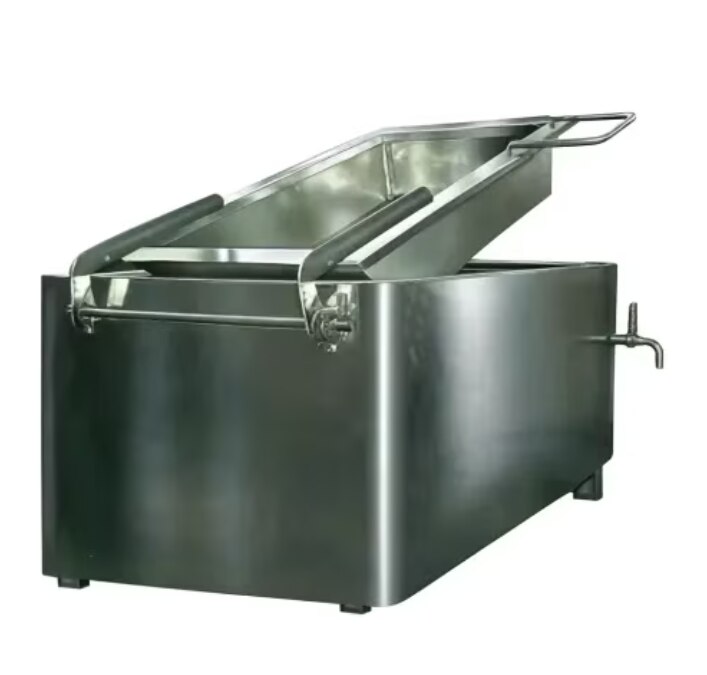
 | Frying Equipment The Batch Fryer by SHAN ENGINEERINGS WORKS is a highly efficient and durable frying solution designed for the food processing industry. View product → |
Frequently asked questions
What does a batch frying cycle include?
A complete cycle includes measured loading, frying, draining, unloading and planned filtration or oil top-up. Excluding these steps overstates hourly output.
Which namkeen products suit a batch fryer?
Batch fryers suit products that need controlled immersion and separate handling, including sev, boondi, peanuts, dal, coated mixtures and similar namkeen items. Compare each product’s load size, moisture, particle size and frying time.
How do you calculate a batch fryer’s real output?
Divide the saleable product from one batch by the full cycle time in hours. Include loading, frying, draining, unloading, filtration, oil top-up and cleaning pauses.
What should you verify before buying a batch fryer in Noida?
Verify the fryer’s usable batch volume, oil temperature recovery, filtration and draining arrangement, electrical or fuel requirement, ventilation, floor space, cleaning access and the documentation required for your plant.
Keywords