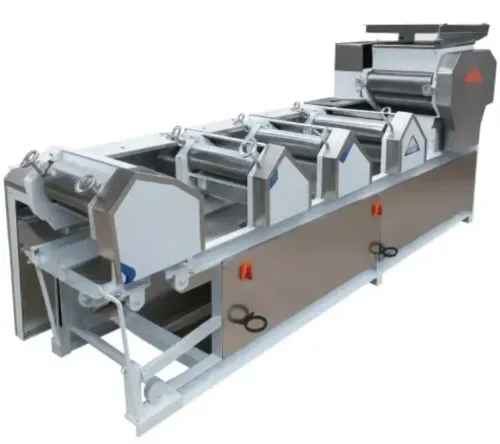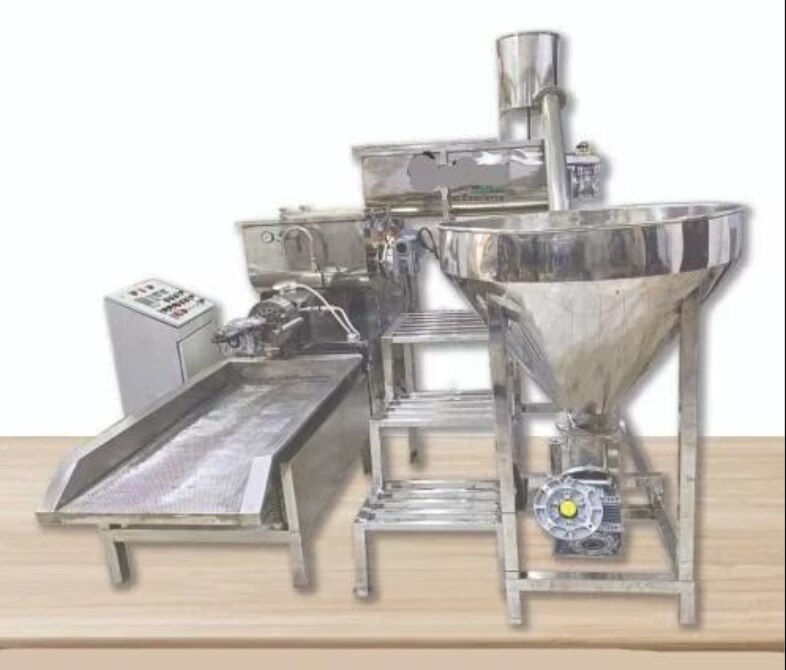
Low macaroni output rarely comes from one cause. Before increasing screw speed or replacing a motor, measure the material feed, dough condition, extrusion pressure, die, cutter, drive system, and drying losses in sequence. By the end, you will know which corrections an operator can make, which faults need repair, and how to verify that production has genuinely recovered.
Key takeaways
- Separate capacity loss from yield loss before changing settings.
- Check ingredients, dough moisture, vacuum, and extrusion before dismantling.
- Match product defects and machine symptoms to the likely fault area.
- Verify output, quality, hygiene, and line performance after repair.
Measure the loss before changing machine settings
Separate capacity loss from yield loss before changing a setting.
Start a record for one complete batch: weigh flour or semolina, record actual water added, dough moisture, dough temperature, die size and hole count, screw speed, extrusion pressure, motor current on each phase, cutter speed, dryer inlet and outlet conditions, and kilograms of saleable dry macaroni per hour.
Compare feed rate with saleable output, not the machine display.
| Condition | What the readings show | Probable loss |
|---|---|---|
| Normal screw speed, lower saleable output | Feed continues but fewer kilograms pass inspection | Breakage, rejected pieces, poor cutter timing, or drying damage |
| High pressure, lower saleable output | Dough meets resistance before the die | Dough condition, restricted die, vacuum loss, or screw wear |
| Lower feed and lower saleable output | Input itself has fallen | Dosing, feeder, mixer, or raw-material supply problem |
Record whether the fault is continuous or intermittent, and note what changed between batches. For macaroni machine output problems in Noida, compare flour or semolina batch moisture and storage records across dry and monsoon conditions before altering the recipe.
This baseline gives macaroni machine troubleshooting a measurable starting point: it separates low capacity from downstream loss and prevents raising screw speed to mask a restriction.
Check ingredients, dough, vacuum, and extrusion before dismantling
Before dismantling, verify the approved recipe, dough condition, vacuum system, and extrusion zone. This sequence is the starting point for macaroni machine troubleshooting when output falls or shape changes.
Check flour or semolina particle size, protein content, batch moisture, water temperature, dosing accuracy, and dough resting time against the recipe. Measure actual water entering the mixer; a pump setting is not proof of delivered volume.
Dough moisture has no universal target because flour and formulation change. Use the recipe’s validated range and compare the faulty batch with a good batch.
| Condition | What to check | Likely result |
|---|---|---|
| Low water addition | Actual water dose and batch moisture | High pressure, brittle or cracked pieces |
| Excess water addition | Dough moisture and sticky mixer discharge | Wet, sticky macaroni and unstable strands |
| Correct moisture, poor dough | Distribution, worn paddles, and dough build-up | Uneven plasticity and fluctuating flow |
Inspect the mixer or kneader before blaming the extruder. Then check the vacuum pump, separator or trap, lid gasket, sight glass, valves, and vacuum line for blockage or leakage. Vacuum loss can produce porous or blistered macaroni and unstable dimensions while screw speed remains normal.
Inspect the feed cone, breaker plate, screw flights, barrel temperature, cooling-water flow, and die zone. Measure dough or die temperature directly; motor temperature is not a substitute. Correct recipe, feed, vacuum, and cooling faults before opening guards or replacing electrical parts.
Read the product and machine symptoms to locate the fault
A partially blocked die gives you three clues at once: output falls, extrusion pressure rises, and motor current increases. Strands emerge with different diameters, and some die holes discharge less product than others.
1. Stop before increasing screw speed. Inspect the die face, inserts, feed cone, and breaker plate for dried dough, foreign particles, damaged holes, and an incorrect die-and-cutter combination. Clear the restriction using the approved cleaning method.
2. Watch pressure and strand flow during a steady run. Fluctuating pressure, weak conveying, and inconsistent discharge point to a worn or damaged screw flight. Do not blame the recipe until you compare dough condition with a good batch.
3. Read the cut product separately from the extruded strand. Long tails, crushed ends, and variable piece length indicate cutter speed, knife clearance, or cutter timing problems. Correct cutter settings only after die flow is even.
4. Listen and feel for drive faults. A slipping belt produces speed variation and squealing; a failing bearing produces heat, rumbling, or vibration; a loose coupling produces knocking and uneven power transfer.
5. For every motor overload trip, check die restriction, dough condition, three-phase voltage, phase imbalance, loose terminals, and variable-frequency-drive fault history before replacing the motor. Record current on each phase.
Rising dough or die temperature can result from excessive screw speed, poor cooling-water flow, hot process water, bearing friction, or gearbox trouble. Repeated stoppage, exposed moving parts, electrical smell, abnormal vibration, or uncontrolled pressure requires qualified macaroni production machine repair, not operator adjustment.
Make the repair safe, hygienic, and suitable for the whole line
A process correction remains an operator task only while the validated water dose, feed rate, screw speed, cutter setting, and dryer recipe stay within the machine maker’s limits. Treat it as macaroni production machine repair when a component is damaged, the same fault returns, or a safety, hygiene, or control function fails.
1. Stop the line before opening the die, removing dough, cleaning the screw, entering a guarded area, or opening the electrical panel. Isolate electrical, pneumatic, and hydraulic energy; lock and tag each isolator, release stored pressure, allow hot surfaces to cool, and verify zero energy.
2. Escalate damaged die holes, worn screw flights, bearing or gearbox noise, loose couplings, repeated overload trips, failed sensors, vacuum leaks, abnormal vibration, and control-panel faults. Do not reset a drive repeatedly to hide a restriction.
3. Use the approved method to remove dough from food-contact parts. Never scrape a die face with hard steel tools, which can score holes and produce uneven macaroni. Inspect die inserts, seals, gaskets, guards, and fasteners before reassembly.
4. Clean and sanitise the mixer, vacuum extruder, die, cutter, conveyors, dryer inlets, cooling section, and packing feed. Remove lubricant, metal fragments, gasket material, and cleaning chemicals before restart.
For macaroni machine service in Noida, require a written scope covering the complete line, not only the motor. The report should record die size and hole count, screw diameter and speed, dough moisture and temperature, extrusion pressure, phase currents, cutter speed, dryer inlet and outlet conditions, and output at each stage.
Shan Engineerings Works is one provider to ask about this whole-line scope.
Related products
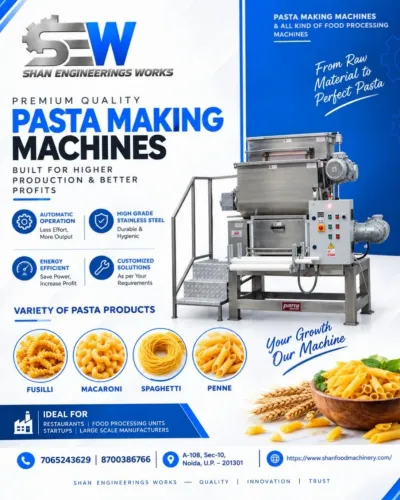
 | Pasta Making Machine Automatic Macroni Making Machine Our Automatic Macaroni Making Machine is a fully stainless-steel, industrial-grade pasta processing machine designed to deliver continuous,... View product → |
 | Pasta Making Machine The Macroni Making Machine from SHAN ENGINEERINGS WORKS is a high-efficiency, fully automatic pasta production solution designed for small to... View product → |
Prove that output has been restored after the repair
Release the macaroni machine only after a full-load test with the intended flour or semolina, approved recipe, die, cutter, and dryer settings. A short no-load run proves that the motor turns; it does not prove saleable output. Let dough temperature, extrusion pressure, vacuum, and dryer conditions stabilise first.
| Measurement | Compare with | Acceptance evidence |
|---|---|---|
| Die discharge | Documented good batch | Every hole produces an even strand |
| Screw speed and pressure | Machine specification or good batch | Stable readings without pressure surges |
| Motor current on each phase | Previous good run | Balanced current without overload |
| Cutter speed and length | Specified piece length | No tails, crushed ends, or excessive variation |
| Product moisture | Approved product range | No dry shell surrounding a wet centre |
| Breakage and rejects | Good-batch record | No unexplained rise in damaged pieces |
| Saleable dry output | Agreed kilograms per hour | Capacity is restored after drying and rejects |
For macaroni machine output problems in Noida, separate an extruder constraint from dryer residence time, conveyor speed, or a packing buffer. Before release, inspect macaroni and food-contact surfaces for metal, gasket material, lubricant, or cleaning chemicals.
Keep a repair record containing the fault, measurements, replaced parts, die size and hole count, settings, cleaning verification, and test result.
- Ask the provider whether replacing a die, screw, bearing, drive component, sensor, or control part is more reliable than repeated adjustments.
- For macaroni machine service in Noida, require testing across the mixer, vacuum extruder, die, cutter, dryer, cooling section, and packing feed.
Frequently asked questions
How do you measure macaroni machine output loss before changing settings?
Record rated capacity, actual kilograms per hour, running time, downtime, rejected product, and finished yield. Separate a machine running slowly from product lost through rejects or trimming.
What should you check before dismantling a macaroni production machine?
Check flour or semolina condition, water dosage, dough temperature and consistency, vacuum level, die condition, cutter timing, and extrusion pressure. These checks identify process faults before mechanical disassembly.
How can product symptoms help locate a macaroni machine fault?
Cracked macaroni points toward dough hydration, vacuum, or die problems; inconsistent lengths indicate cutter timing or knife wear; low output with high pressure points toward a blocked die or restricted feed.
How do you prove that macaroni machine output has been restored?
Run a documented production trial and compare kilograms per hour, moisture, shape, dimensions, breakage, rejects, power use, and downtime with the pre-repair baseline.
Keywords